
How Dankers built a findable catalog on reliable data

Client

Dankers Special Cases

Market

E-commerce

meet our Expert

David Van Brakel
Owner, Dok Online

How Dankers built a findable catalog on reliable data

Executive summary

Dankers Special Cases has built custom cases in Tilburg for 30 years: flight cases, kunststof cases and aluminium boxes across a 2,000-product catalog. But buyers landed on bare category pages that never helped them choose, and the company couldn’t trust its analytics.

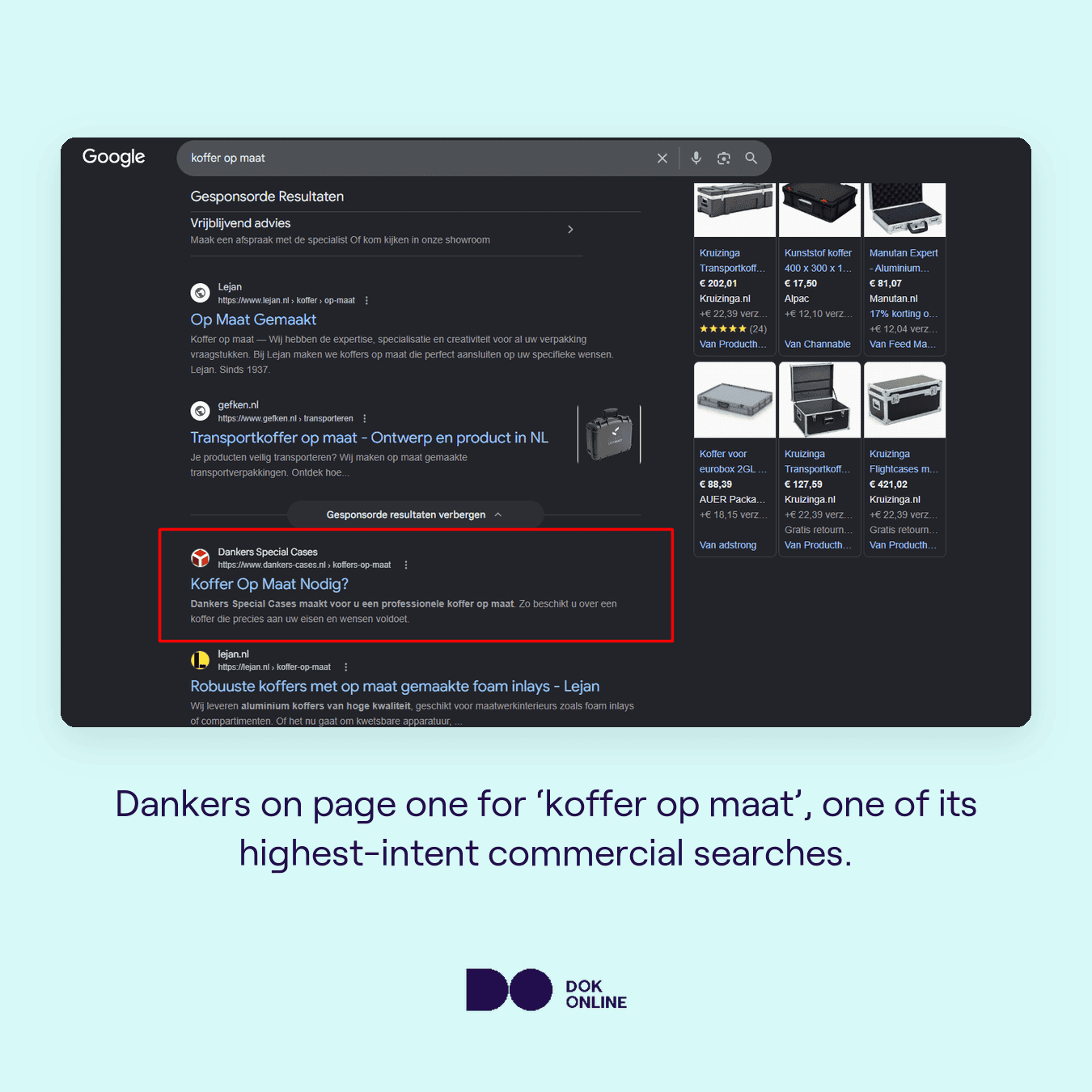
So Dok Online fixed the measurement first, then built content and campaigns on data we could trust. Today Dankers ranks across the custom-case category, sits in the top 10 for its priority searches, and counts real inquiries honestly.
Results

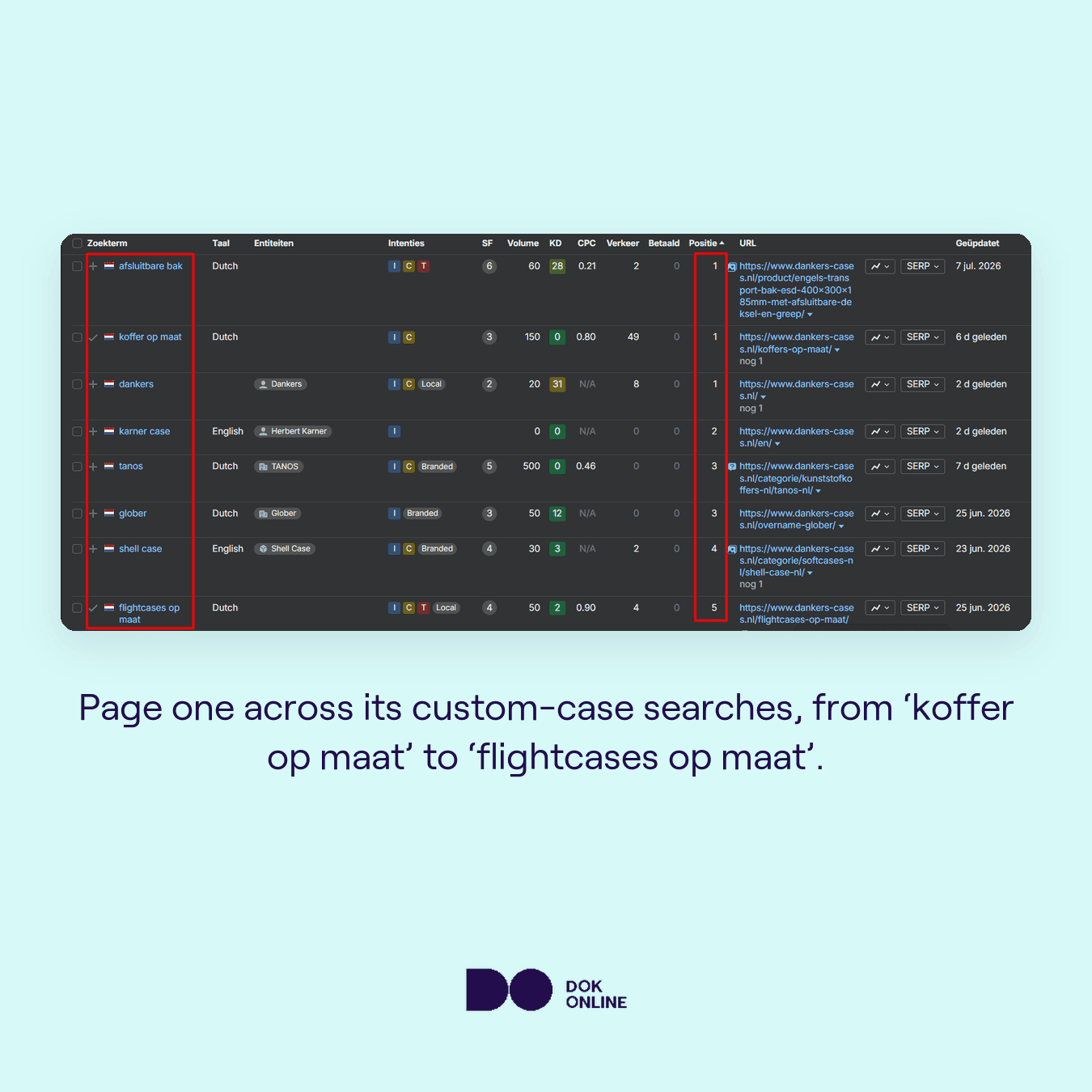
  • “flightcase op maat” surged from around position 35 onto page one: the single biggest ranking gain of the campaign, on one of the catalog’s highest-intent commercial terms.
  • Top five position for “maatwerk koffer”, and up from page three to page two for “kunststof koffers”.
  • First-page presence across the custom-case category: 300+ searches now in the top 10, dozens of them in the top three.
  • Genuine inquiries roughly doubled across the first half of 2026, now counted accurately for the first time.
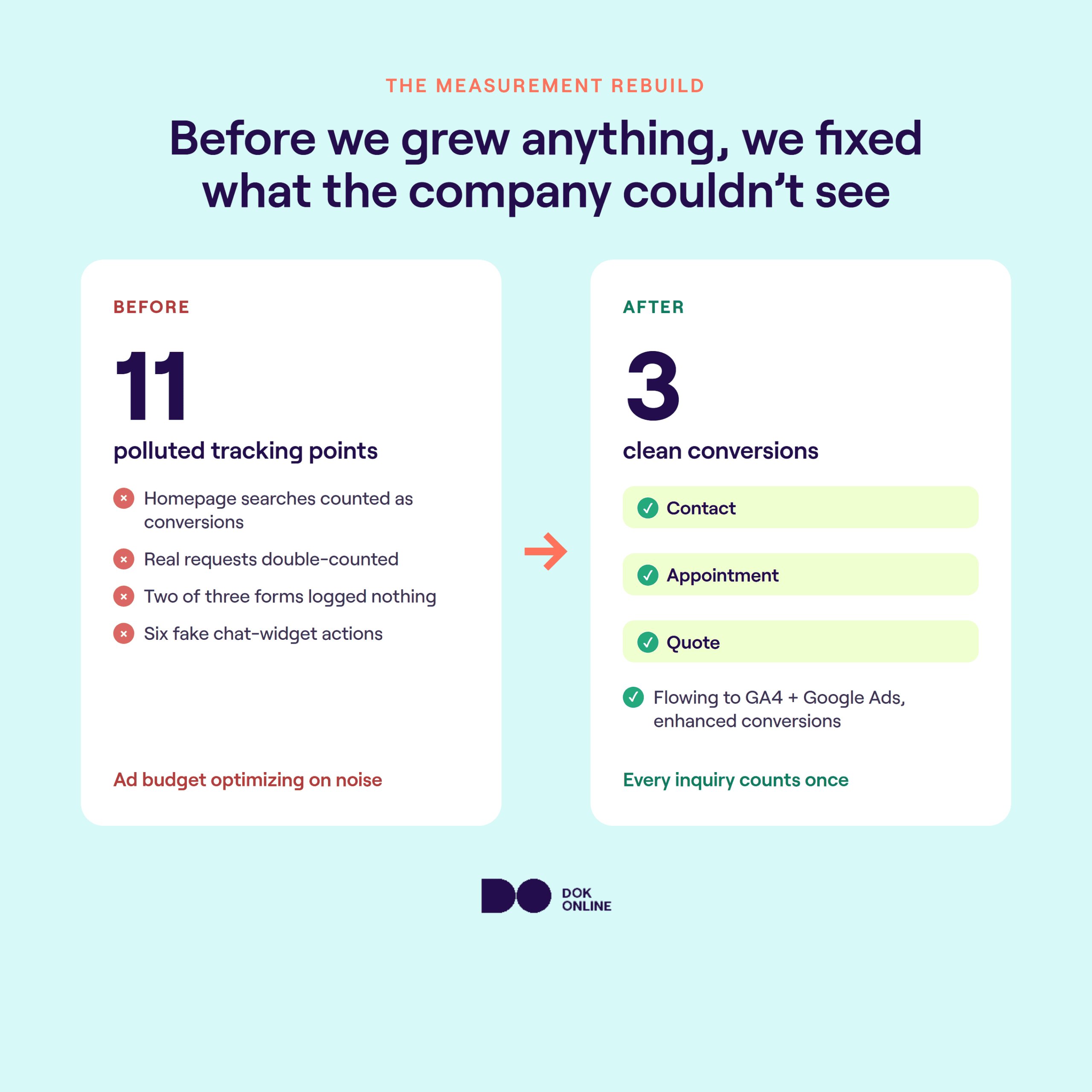
  • Conversion tracking rebuilt from eleven polluted measurement points to three clean ones, so every inquiry counts once and the ad budget optimizes on real requests, not noise.

Our approach

We ran this as two problems of visibility. First the company could not see its own performance, so we made the numbers honest. Then its customers could not find it or choose it, so we made it findable and easy to buy from. Everything below follows that order: measurement first, growth second.


An audit exposed three faults at once: it counted homepage searches as conversions, double-counted some requests, and missed others, since two of three contact forms logged nothing. We rebuilt it: three clean conversions, contact, appointment and quote, now flow to GA4 and Google Ads with enhanced conversions, replacing eleven polluted measurement points. From then on, every request counts once, the technical foundation the rest of the work stood on, and where our technical SEO work always begins.

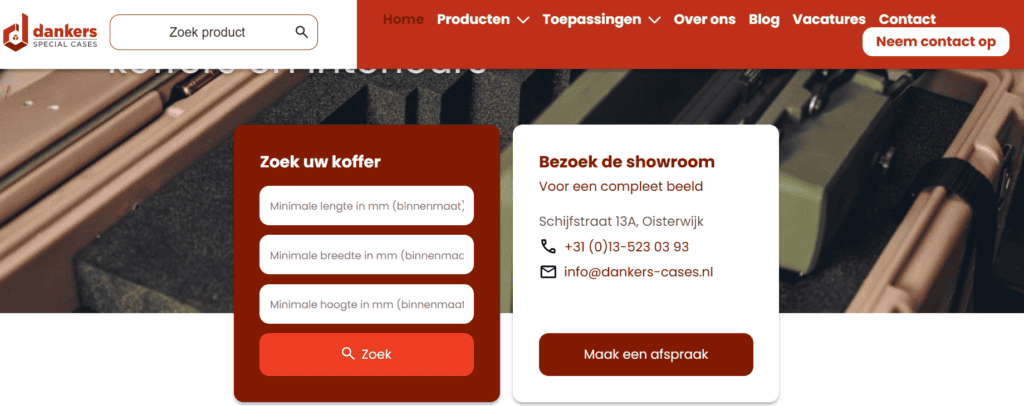
A buyer moving sensitive equipment rarely knows whether they want a flight case, a kunststof case or an aluminium box. So we organized around the job, not the product: a “koffer op maat” hub and use-case landing pages for how people actually buy. It sits on a topical map of 2,400+ keywords in a 66-page plan, so every page answers proven demand. It is the same ecommerce SEO principle we bring to any catalog: structure around how buyers search.

Each page was built to rank as well as convert: clear heading structure, meta titles written to earn the click, and internal links connecting related case types. Then we handed the system over, with templates and short video guides, so the Dankers team now builds new pages itself and the approach scales without every hour coming from us.

The first landing pages under-converted because they only linked out to a contact page. We changed that: three contact options, appointment, contact and quote, openable from any button across the site, forms placed directly on the landing pages, and a mobile experience rebuilt so visitors could act without leaving the page.

With trustworthy conversions in place, we rebuilt the Google Ads account around new Performance Max campaigns. Freed from optimizing on noise, the budget moved to the searches that produce real requests, and paid search became a dependable second channel alongside organic.